
Baltimore Police Blotter
Baltimore police blotter records are maintained by the Baltimore Police Department, which serves the independent city of Baltimore. The BPD is one of the largest law enforcement agencies in Maryland, and it handles all police reports, incident logs, and arrest records within city limits. Baltimore operates separately from Baltimore County, so you need to go through the city's own records system to get police blotter data for incidents that took place within the city. The department offers both online and mail-based options for requesting reports, and several open data tools let you search crime information without filing a formal request.
Baltimore Police Blotter Overview
Baltimore Police Department
Baltimore is an independent city. It is not part of any county. The Baltimore Police Department handles all law enforcement within city limits. This is different from the Baltimore County Police Department, which covers the surrounding county. If your incident happened in the city, you deal with BPD. If it happened in Towson, Dundalk, or another area outside city limits, that falls under Baltimore County.
BPD operates out of nine police districts across the city. Each district has its own station and phone number. The Central District can be reached at (410) 396-2411. The Eastern District is at (410) 396-2433. The Western District number is (410) 396-2477. For records requests, though, everything goes through one central unit regardless of which district handled the incident.
The Community Correspondence Unit is the main contact for police blotter records. You can reach them at (410) 396-2222 between 7 AM and 3 PM, Monday through Friday. Their email is ccu@baltimorepolice.org. The mailing address is 242 W. 29th Street, Baltimore, MD 21211. All formal records requests go through this office, whether you send them by mail or email.
How to Search Baltimore Police Blotter Records
Baltimore offers several ways to look up police blotter data. The fastest free option is the Open Baltimore data portal. This site has multiple datasets you can search. The Part 1 Crime Incidents dataset covers major crimes like homicide, robbery, and aggravated assault. There is also an Arrests dataset and a Calls for Service dataset that goes back to 2017. You can filter by crime type, date range, and police district. Data exports are available in CSV, Excel, and PDF formats.
The BPD website at baltimorepolice.org is the starting point for all police blotter searches in the city.
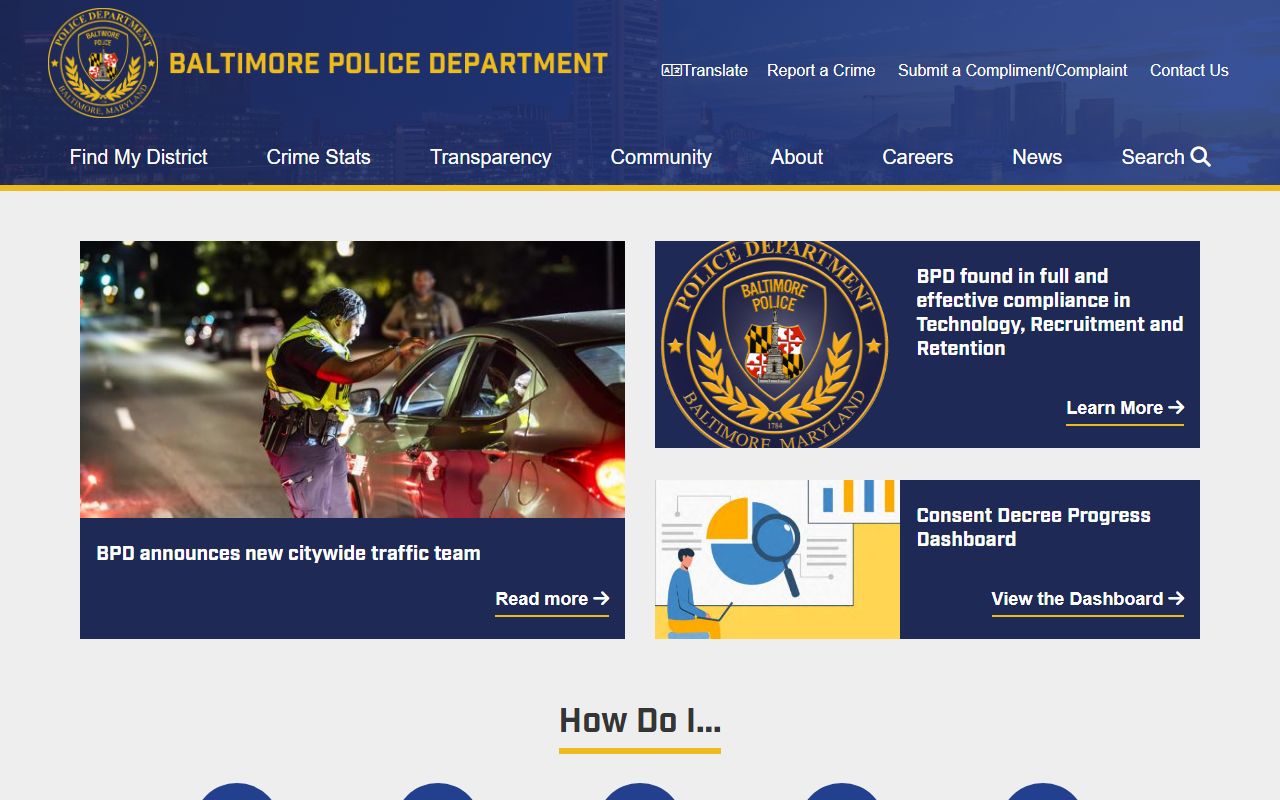
From the main BPD site, you can navigate to records requests, crime stats, and the online reporting tool.
For court records tied to police blotter entries, use the Maryland Judiciary Case Search. It is free and covers all courts in the state. You can search by name, case number, or citation number. The system shows charges, court dates, and case outcomes. It will not show the raw police report, but it gives you a good picture of what came out of a police blotter incident.
BPD also has a crime map that shows incidents by location. You can filter it by crime type and date range. The ComStat Unit puts out weekly executive summary reports every Thursday with citywide and district-level stats. These are available for viewing, printing, and downloading on the BPD website.
Note: Open Baltimore crime data from May 2021 onward may have gaps due to a records management system upgrade the department is still working to resolve.
How to Request Baltimore Police Reports
There are two main ways to get a copy of a Baltimore police blotter report. For accident reports from January 2011 onward, you must use the LexisNexis online portal. Select Maryland as the state and Baltimore City Police Department as the jurisdiction. You can search by report number, party name and date, or location. Each report costs $14.00 and you pay by credit card. Reports are available about 10 business days after the accident date.
The LexisNexis system lets you search for and purchase Baltimore accident reports online.
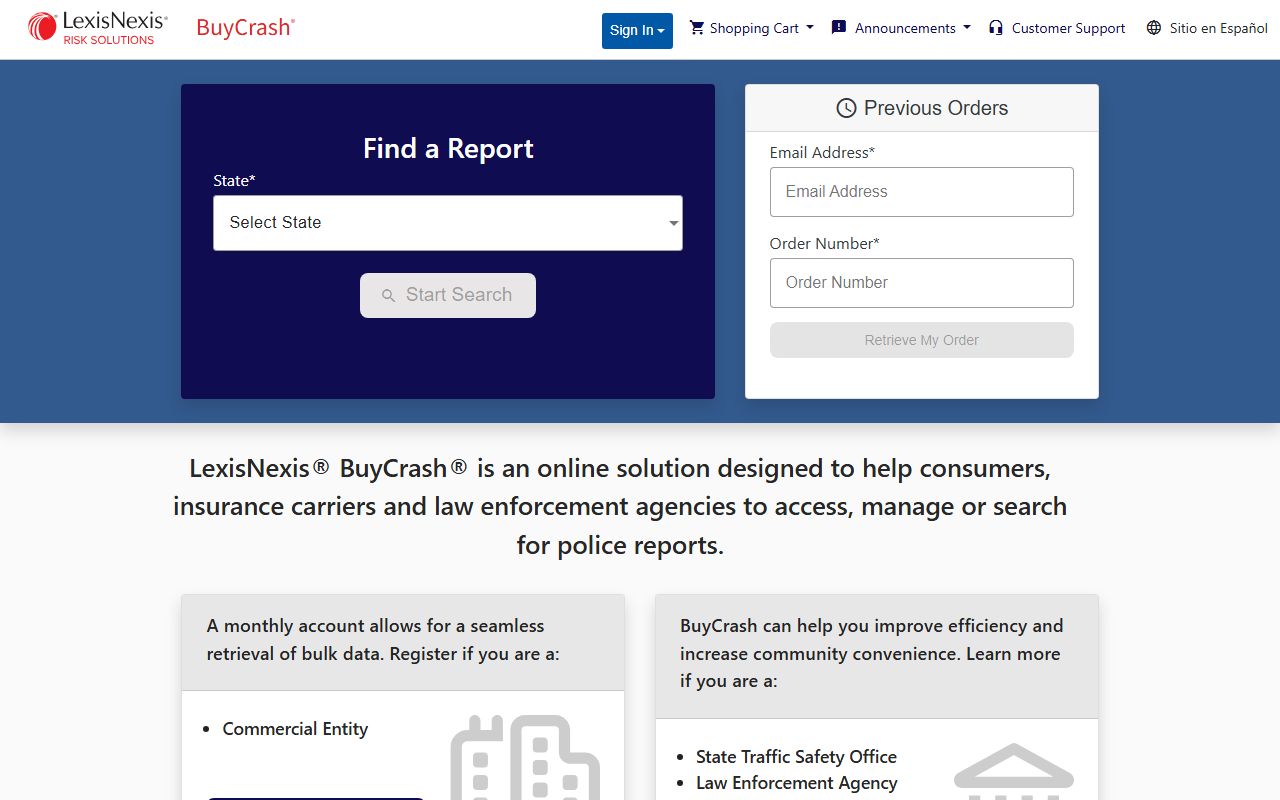
You will need a report number, party name, or incident location to search the LexisNexis system for Baltimore reports.
For all other police blotter reports, use Form 378. This is the Baltimore Police Department Police Report Request Form. It asks for your name, address, phone number, the date and time of the incident, the type of report (offense or accident), the case number if you have it, the location, and any victim names. You can submit this form by email to ccu@baltimorepolice.org or by mail to the Community Correspondence Unit at 242 W. 29th Street, Baltimore, MD 21211.
The BPD records request page walks you through the full process for getting police blotter reports.
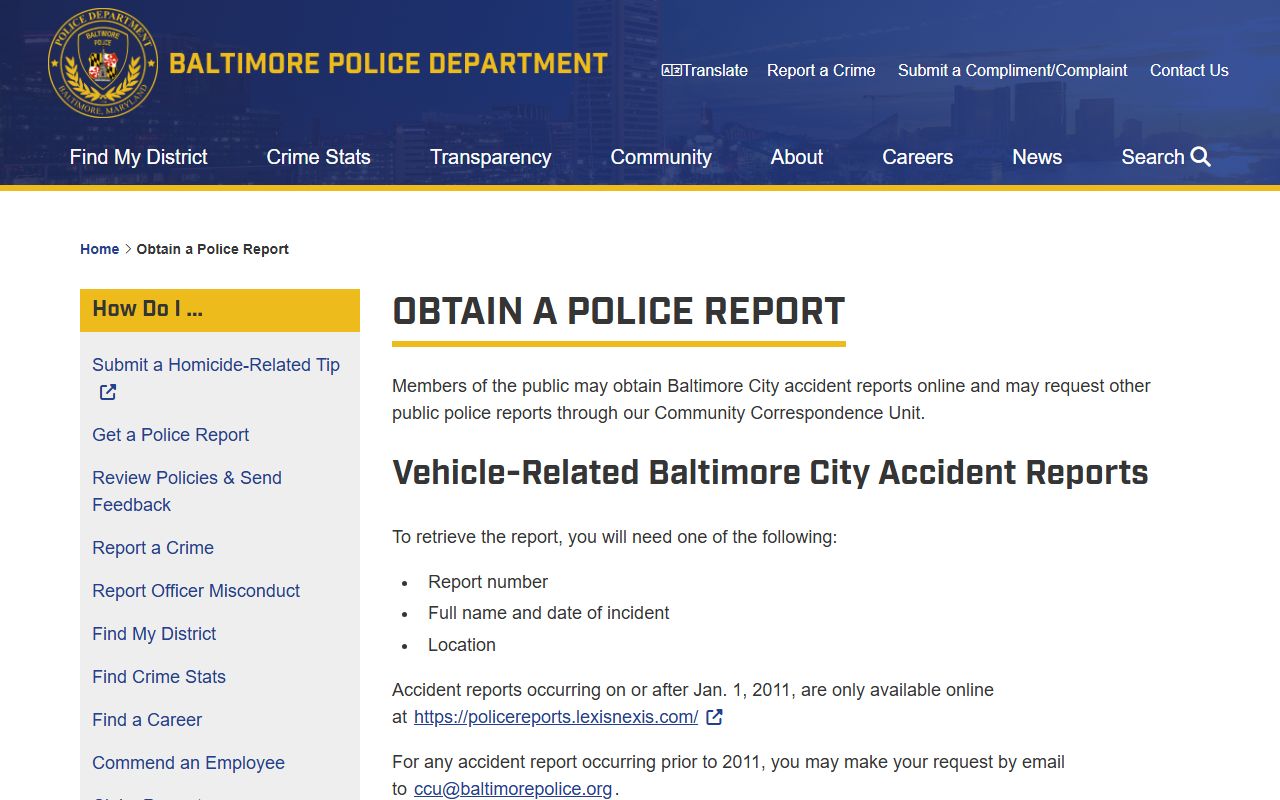
Follow the instructions on this page to submit Form 378 or file an MPIA request for Baltimore police records.
You can also file a Maryland Public Information Act request for records that go beyond a standard police report. Send MPIA requests to the Office of Legal Affairs at the same address, attention Dana Abdul Saboor or the MPIA Representative. Include a self-addressed stamped envelope with mail requests. The $10.00 search fee is non-refundable, so make sure you have the right agency before you send your payment.
What Baltimore Police Blotter Records Contain
A Baltimore police blotter report includes the incident narrative, the date and time it happened, and the exact location. It lists the involved parties with names, addresses, and contact information. Witness information is included when available. The report also shows officer observations, any evidence collected, and charges filed. Each report gets a CC# (City Case number) that you can use to track it through the court system.
Certain information gets redacted from public copies. Officer names may be replaced with traceable numbers in some situations. Badge numbers can be removed. Social Security numbers and dates of birth are always redacted. Medical information stays out of public copies. Details about ongoing investigations are withheld. Juvenile information is protected under Maryland law, and victim details in sensitive cases may be removed as well.
Note: Accident reports prior to 2011 can still be requested through Form 378 by mail, but anything from 2011 onward must go through LexisNexis.
Baltimore Police Blotter Fees
Fees for Baltimore police blotter records depend on the type of report and how you request it. Online accident reports through LexisNexis cost $14.00 per report, paid by credit card. Mail requests for accident reports or incident reports cost $10.00. This is a non-refundable search fee. Make your check or money order payable to "Director of Finance, City of Baltimore." Cash is not accepted.
Microfilm reports from before 2001 also cost $10.00. Copy fees per page vary depending on the size of the record. Credit cards are only accepted for online LexisNexis purchases. For everything else, you need a check or money order mailed to 242 W. 29th Street, Baltimore, MD 21211. Fee waivers are available but must be requested in writing. You need to show financial hardship or a public interest purpose. The department decides on a case-by-case basis.
Baltimore Police Blotter Resources
The online reporting page lets you file certain non-emergency reports 24 hours a day. Lost property, minor theft, and vandalism reports can go through this system. For anonymous tips, contact Metro Crime Stoppers at 1-866-7-LOCKUP. The BPD also has a mobile app with crime mapping, report submission, and district contact information.
The BPD open data page links to all available crime datasets. The news page has press releases about major incidents. For general questions about Baltimore police blotter records, the Central Records Section can be reached at (410) 396-2321. The main BPD phone number is (410) 396-2222.
The Maryland Attorney General's PIA page has sample request letters and fee waiver forms you can use when requesting Baltimore police records. The Maryland Judiciary Case Search remains the best free tool for looking up court cases linked to police blotter entries in Baltimore.
Nearby Cities
Looking for police blotter records in a nearby area? Check these neighboring communities.