
Maryland Police Blotter
Maryland police blotter records are kept by local law enforcement agencies in each of the state's 23 counties. These records log incidents, arrests, and calls for service handled by county sheriff offices, municipal police departments, and the Maryland State Police. You can search police blotter data through the Maryland Judiciary Case Search system, local agency portals, and open data sites. Each county in Maryland has its own process for releasing police records under the Maryland Public Information Act. This page covers how to find and request police blotter reports across Maryland, what those records contain, and where to look based on your location in the state.
Maryland Police Blotter Overview
Where to Search Maryland Police Blotter Records
Police blotter records in Maryland come from several sources. The main one is the local law enforcement agency that handled the call. Most counties have a sheriff's office that keeps incident reports. Many cities and towns run their own police departments too. So the first step is to figure out which agency has the report you need.
The Maryland Judiciary Case Search is a free tool that lets you look up court cases tied to police incidents statewide. You can search by name, case number, or date. It covers all circuit and district courts in Maryland. While it does not show the raw police blotter entry, it links to the court records that come from police action. This is one of the best places to start a search for Maryland police blotter data.
The Maryland Judiciary is also rolling out a new consolidated records portal. It merges the old Case Search with the Judiciary Record Search into one platform. No login is needed for basic lookups. This gives you a broader view of case records tied to police incidents across the state.
You can find police blotter entries at the Maryland Judiciary Case Search portal, which covers all courts in the state.
The case search system shows criminal and civil filings linked to police blotter incidents from any county in Maryland.
Note: Case Search results show court filings, not raw police blotter logs. For the actual incident report, contact the agency that handled the call.
How to Get Maryland Police Reports
Most police blotter reports in Maryland cost between $5 and $25 depending on the agency. Some counties charge a flat fee per report. Others bill by the page or by the hour of search time. The first two hours of search time are free under the MPIA for most agencies in Maryland.
To request a police blotter report, you typically need the date of the incident, the location, and the names of people involved. Some agencies have online request forms. Others accept walk-in requests at their records division. A few still require written requests sent by mail or fax. Each county page on this site breaks down the exact steps for that area.
The Maryland State Police Central Records Division handles reports for incidents investigated by state troopers. Their office is at 1711 Belmont Avenue in Baltimore. You can reach them at (410) 281-2700. They process crash reports and investigative reports. The fee for a crash report search is $4, paid by check or money order. For other reports, submit a written request with the MSP report number, date, and location.
The MSP Central Records Division handles state-level police blotter requests for incidents on highways and state property.
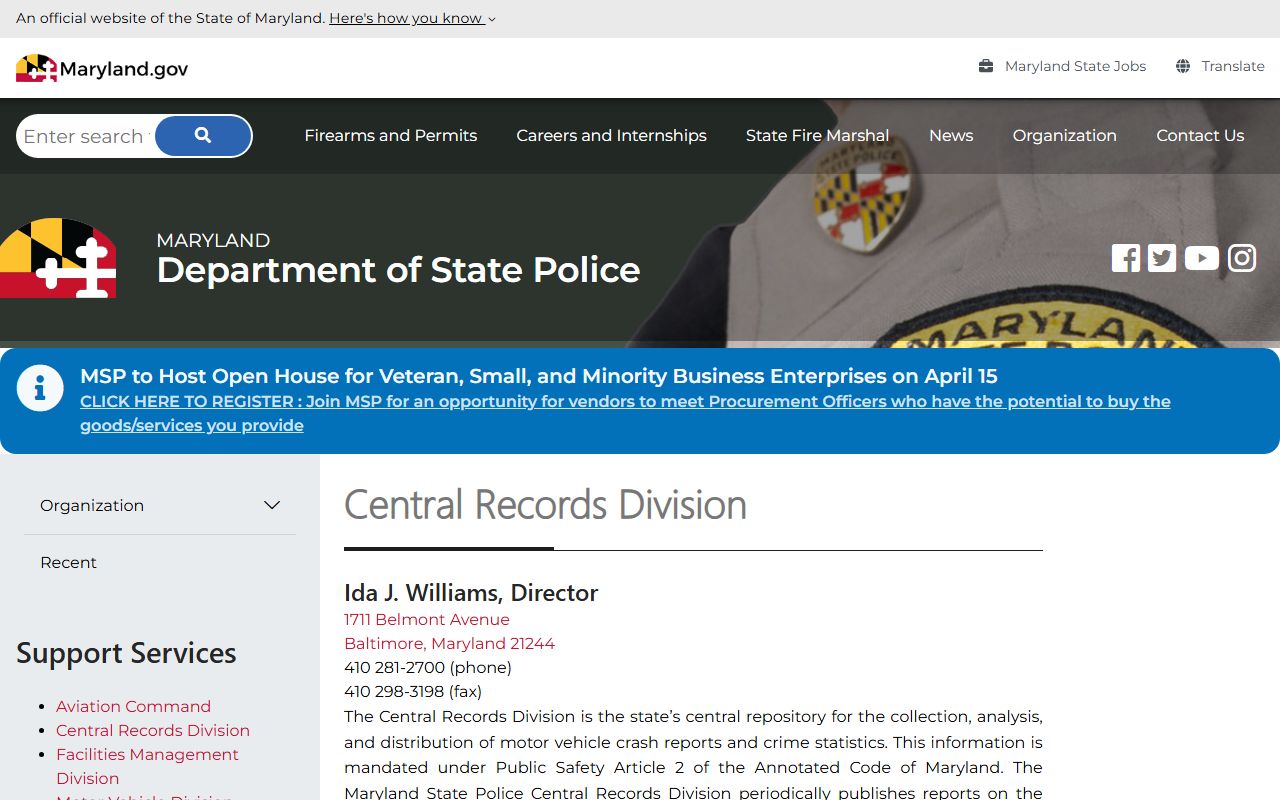
This is where you go for any police report involving a Maryland State Trooper.
Maryland Public Information Act and Police Records
The Maryland Public Information Act (MPIA) is the law that gives you the right to request police blotter records. It falls under the General Provisions Article, Title 4 of the Maryland Code. Any person can file an MPIA request. You do not need to live in Maryland or give a reason for your request.
When you send an MPIA request, the agency must respond within 10 working days. They can either give you the records, deny the request, or ask for more time. If they need more time, they can extend the deadline to 30 days. They must tell you why. If they deny your request, they must put it in writing and cite the legal reason. You have the right to appeal a denial. The Maryland Attorney General's PIA page has sample request letters, fee waiver forms, and the full PIA manual.
Some parts of police blotter records may be redacted. Active investigation details are often withheld. Juvenile names get removed. So do home addresses of victims in certain cases. Medical information is also taken out. But the core facts of the incident are usually released. The date, time, location, type of call, and outcome are all part of the public record in Maryland.
The Attorney General's office provides the official guide for filing public records requests in Maryland.
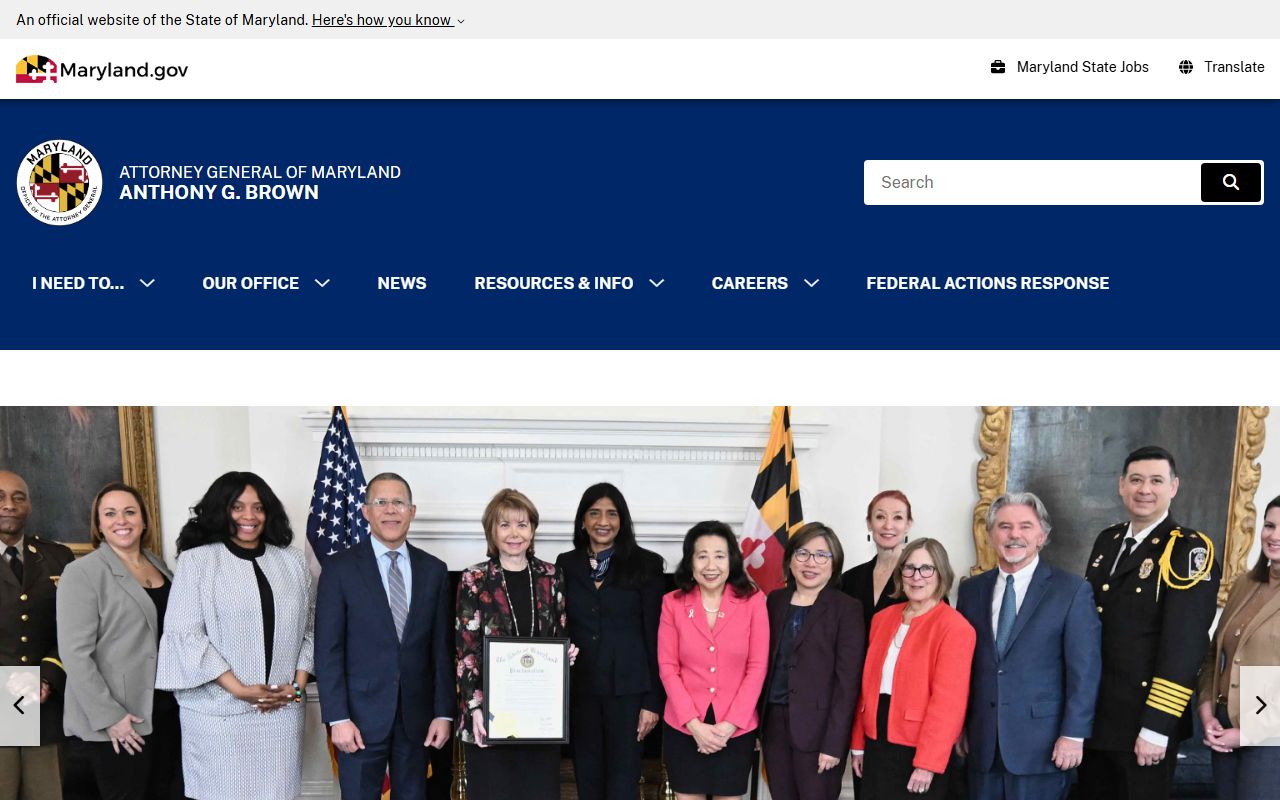
This page has the PIA manual and sample request forms you can use to get police blotter records from any Maryland agency.
Note: Fee waivers are available for people who cannot afford the cost, and you can get the form from the Attorney General's site.
What Maryland Police Blotter Records Contain
A police blotter entry in Maryland usually has a case number, the date and time of the incident, the location, and a brief description of what happened. It lists the type of call and the responding officer. If an arrest was made, it shows the charges and the name of the person arrested.
Full incident reports go deeper than a basic blotter entry. They include a narrative written by the officer, witness statements, property and evidence lists, and CAD dispatch information. Reports follow the NIBRS format used by most Maryland law enforcement agencies. NIBRS stands for the National Incident-Based Reporting System. It standardizes how agencies report crime data. The Governor's Office of Crime Prevention and Policy publishes aggregate crime data from these reports for the whole state.
Maryland police blotter records generally do not include sealed juvenile records, ongoing investigation details, or certain victim information. Mental health records tied to an incident are also held back. But you can get most other details through an MPIA request. The level of detail varies by agency. Some departments release very thorough reports. Others provide a more basic summary.
Maryland Crime Statistics and Data
Maryland tracks police blotter data at the state level through the Governor's Office of Crime Prevention and Policy. Their dashboard breaks down crime stats by county and municipality. You can see trends over time and compare areas.
The state crime dashboard lets you view police blotter statistics for every county in Maryland.
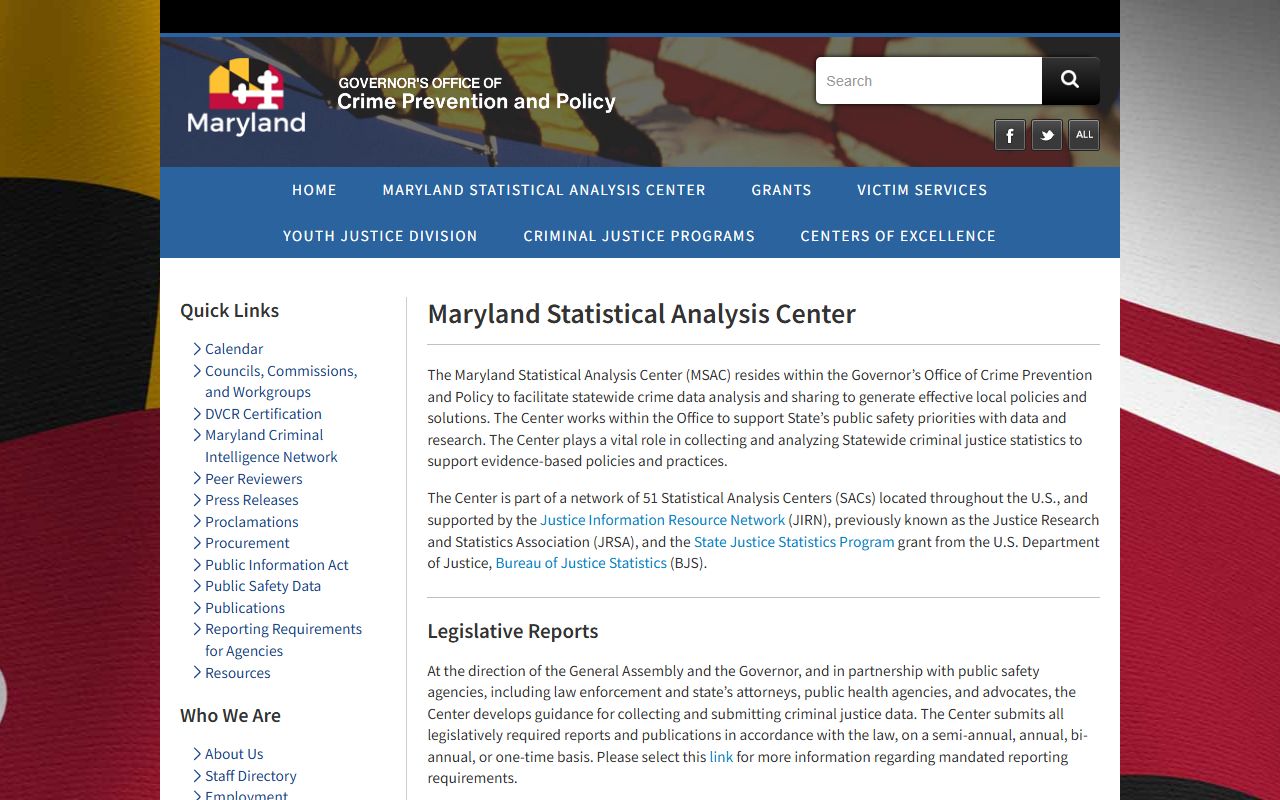
Use this tool to look at crime trends and police activity across the state.
Several counties also run their own open data portals. Montgomery County has one of the best. It lets you filter police blotter entries by date, crime type, and location on a map. Anne Arundel County and Howard County offer similar tools. These portals pull from the same NIBRS data that feeds the state dashboard.
The Maryland State Police PIA request page is where you go to get state police reports that are not in the online databases. Some older records or detailed case files require a formal request.
The MSP public information request page lets you submit formal requests for police blotter records.
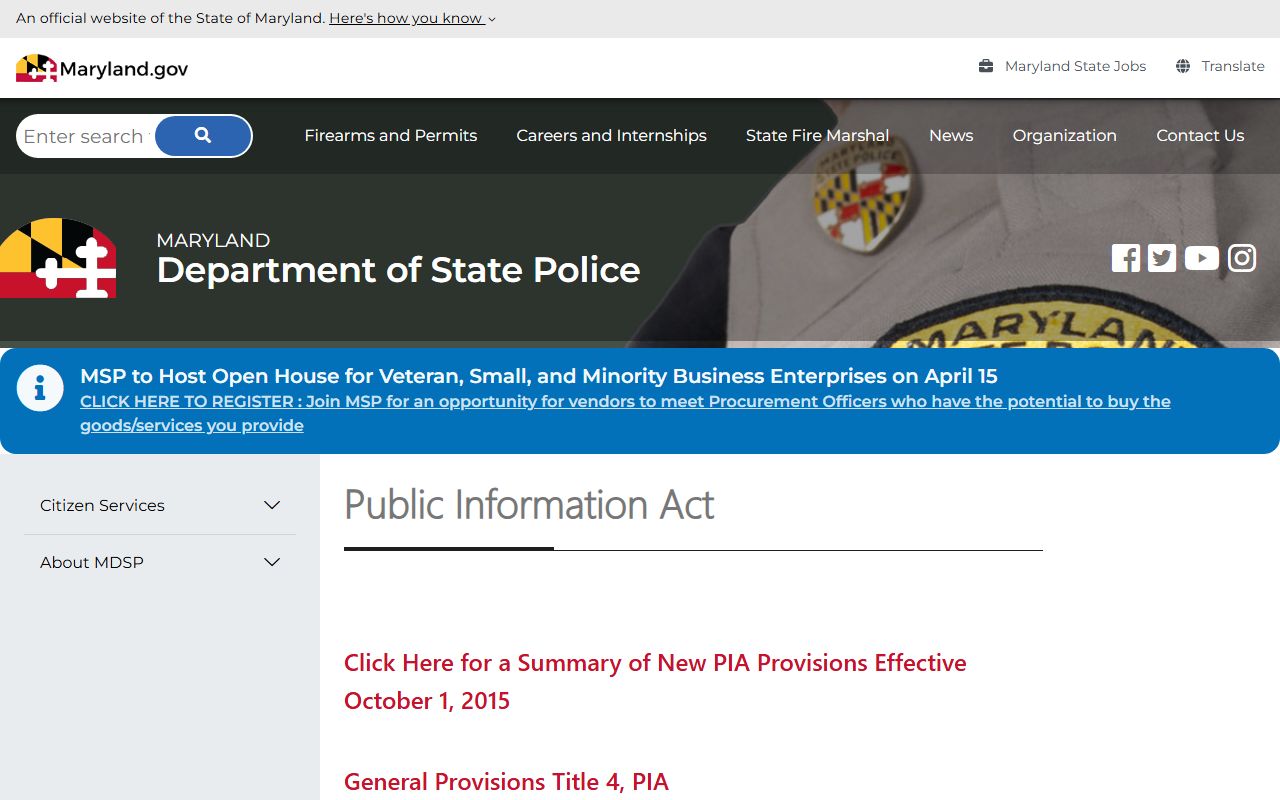
State police records not available online can be requested through this portal.
Processing Times: MPIA requests can take 10 to 30 working days depending on the agency and the scope of what you ask for.
Police Blotter Access by County in Maryland
Every county in Maryland handles police blotter requests a little differently. Some counties like Charles County and Cecil County use the NextRequest platform for online submissions. Carroll County and the City of Gaithersburg use JustFOIA. Others like Allegany County have their own web forms. And a few still take requests by mail, fax, or in person only.
Fees range quite a bit across the state. Charles County charges $8 per report plus $0.50 per page. Cecil County bills at $25 per hour of search time plus $0.25 per page. Talbot County asks for $5 for short reports and $0.50 for each extra page. Calvert County uses the NextRequest portal, and reports from the Records Unit are processed through the sheriff's office. Frederick County uses a GovQuest system with a base fee of $5 or more. Harford County also uses GovQuest plus the CrashDocs system for vehicle crash reports.
Some counties respond faster than others. Charles County typically gets records out in 7 to 10 days. Many others take the full 30 days allowed under the MPIA. If you need a report fast, calling the agency first can help. Walk-in requests at a records office are sometimes processed the same day if the report is already finalized.
Maryland Criminal History and Background Checks
The Criminal Justice Information System (CJIS) under the Department of Public Safety and Correctional Services handles background checks in Maryland. Their office is at P.O. Box 32708 in Pikesville. You can call them at (410) 764-4501. A fingerprint-based background check costs $38.
CJIS background checks are different from police blotter records. A background check pulls from a statewide database of criminal history. A police blotter record is a single incident report from one agency. You might need both depending on what you are looking for. Police blotter records come from the local agency. Background checks come from CJIS at the state level in Maryland.
Browse Maryland Police Blotter by County
Each county in Maryland has its own law enforcement agencies that maintain police blotter records. Pick a county below to find local contact info and how to request records in that area.
Police Blotter in Major Maryland Cities
Residents of major cities get police services from their county agency or a municipal department. Pick a city below to learn about police blotter access in that area.